
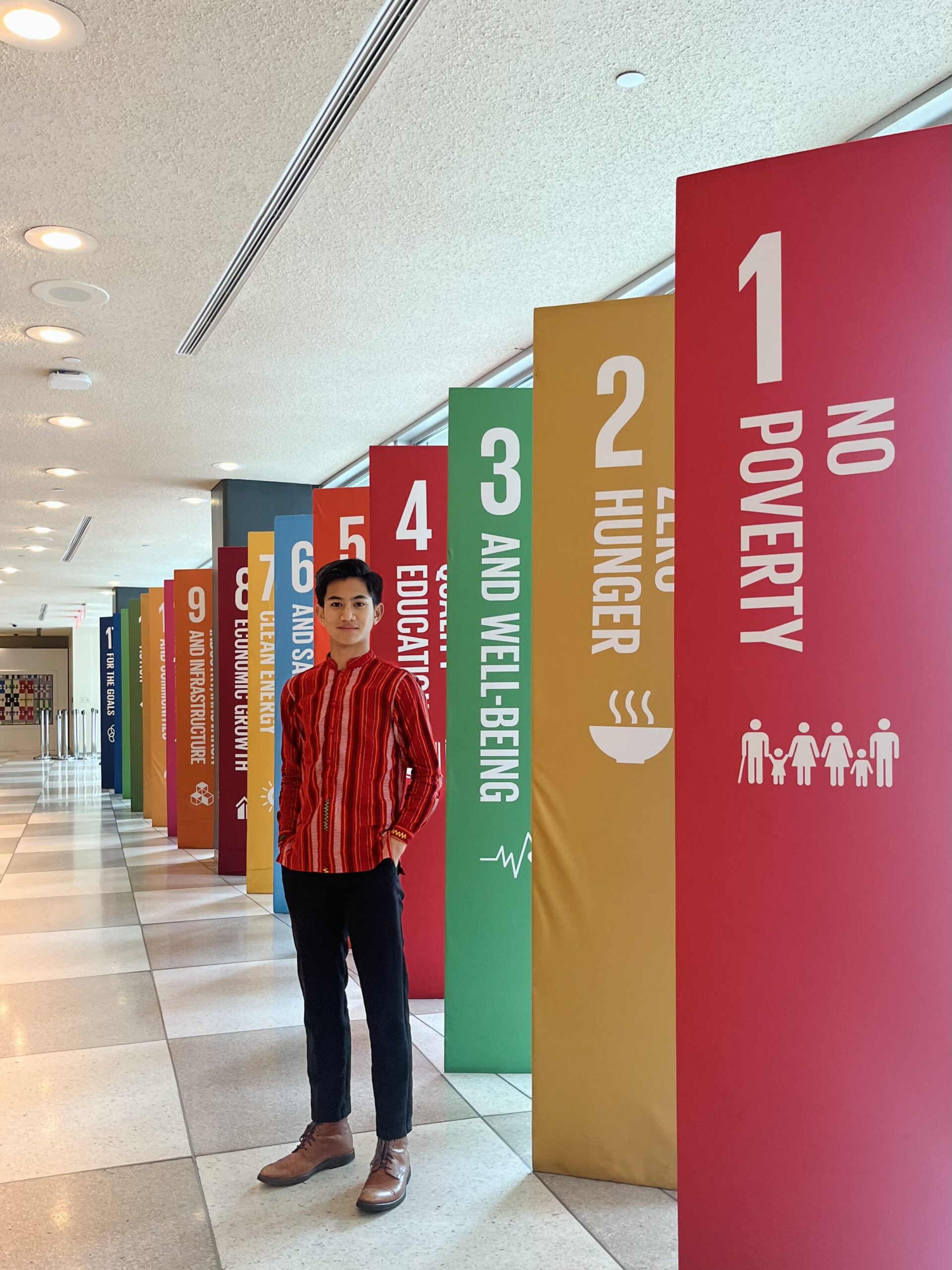
One cultural symbol that I brought from my Indigenous community in the Philippines is this button-up shirt made from inabel.
Inabel is a colorful handwoven fabric made of cotton or other natural fibers. Common colors of inabel are red, white, black, and some shades of yellow and green. And one prominent thing about inabels is the distinct patterns that are made through different techniques that each tribe has. The patterns are also mimics of the environment so if you look at them closely, triangle patterns most likely represent the mountains, waves represent the rivers, and many more. Each of these patterns has specific meanings and is carefully woven by hand (no machines!).
Beyond the fact that this was tailored for me to wear, this is very significant to me because it serves as a cultural identity of the peoples of Northern Philippines that I grew up witnessing in every community gathering that we had. I remember seeing my grandmother and elderly women in my Indigenous community wearing inabel, which showed me how colorful our community is and how deep our connections with nature and environment is. It is through this fabric that we show our relationship with the environment and how we are in reciprocal relationship with it.
As the anthropologist Paul Nadasdy argues in his work with the Yukon people of Canada, hunting is not simply humans dominating animals nor animals as inert resources. Instead, hunting should be viewed as a relationship of reciprocal exchange between humans and “other-than-human persons” (animals). This is particularly true with my upbringing in an indigenous community in the Philippines because we are taught that animals and the nature are of equal position as humans in the world. Thus, there is a responsibility of acknowledging them – which is why we have inabels! This taught me the value that we owe everything to the environment and that we are merely human beings. And that as humans, we have the responsibility to honor our environment—to take care of it and to care for our community, the people around us, because we all benefit from one another.
